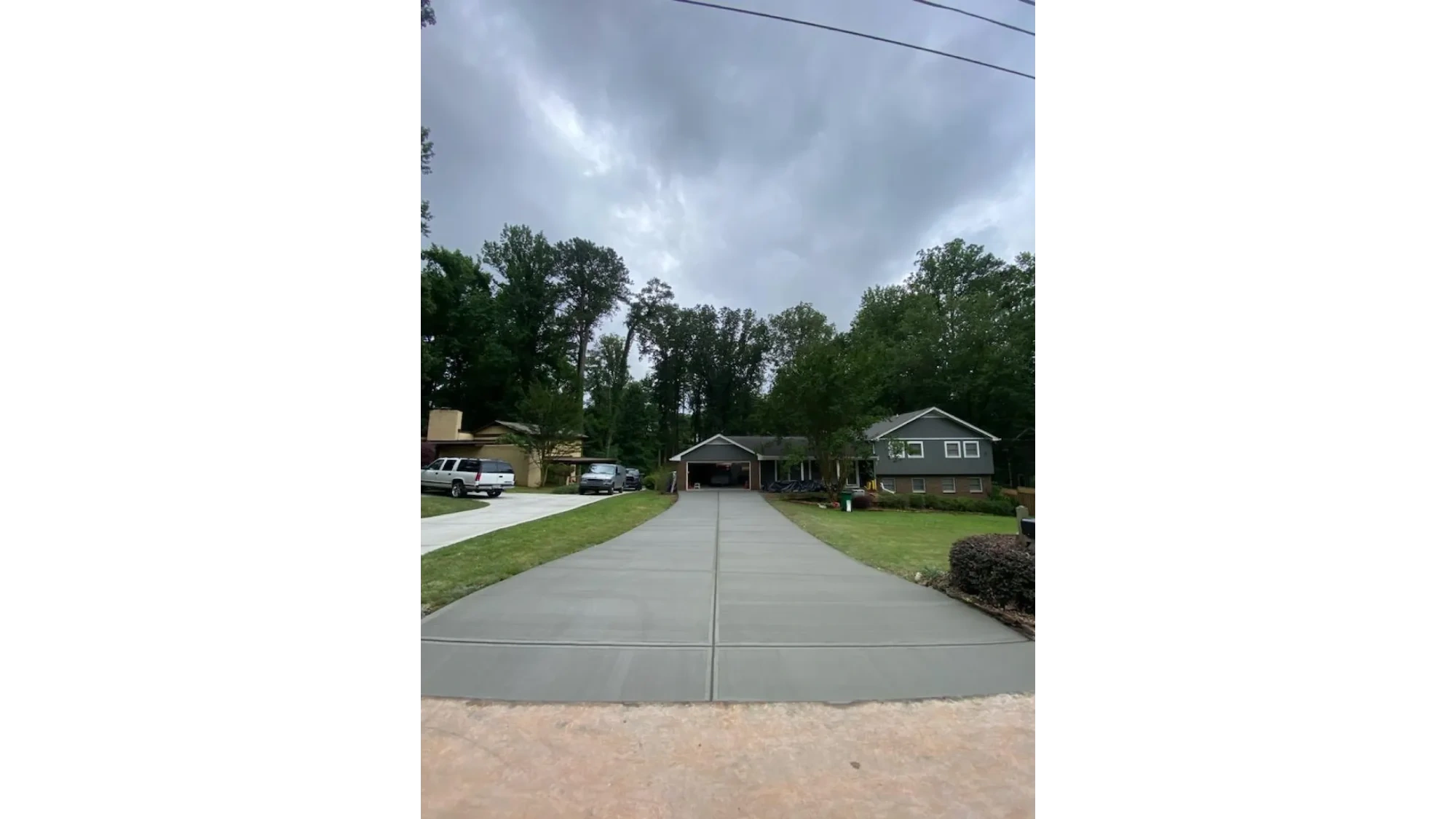
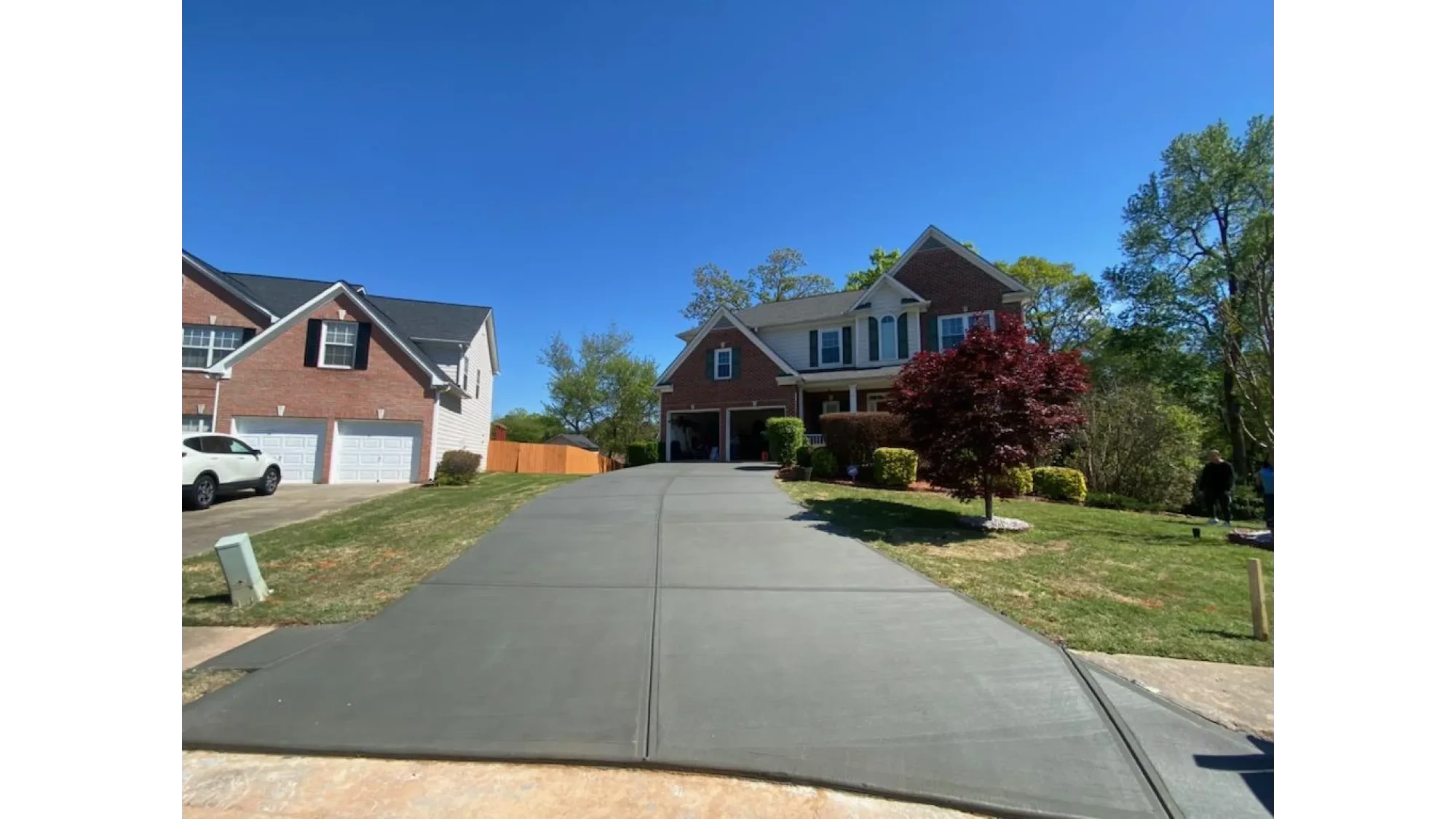
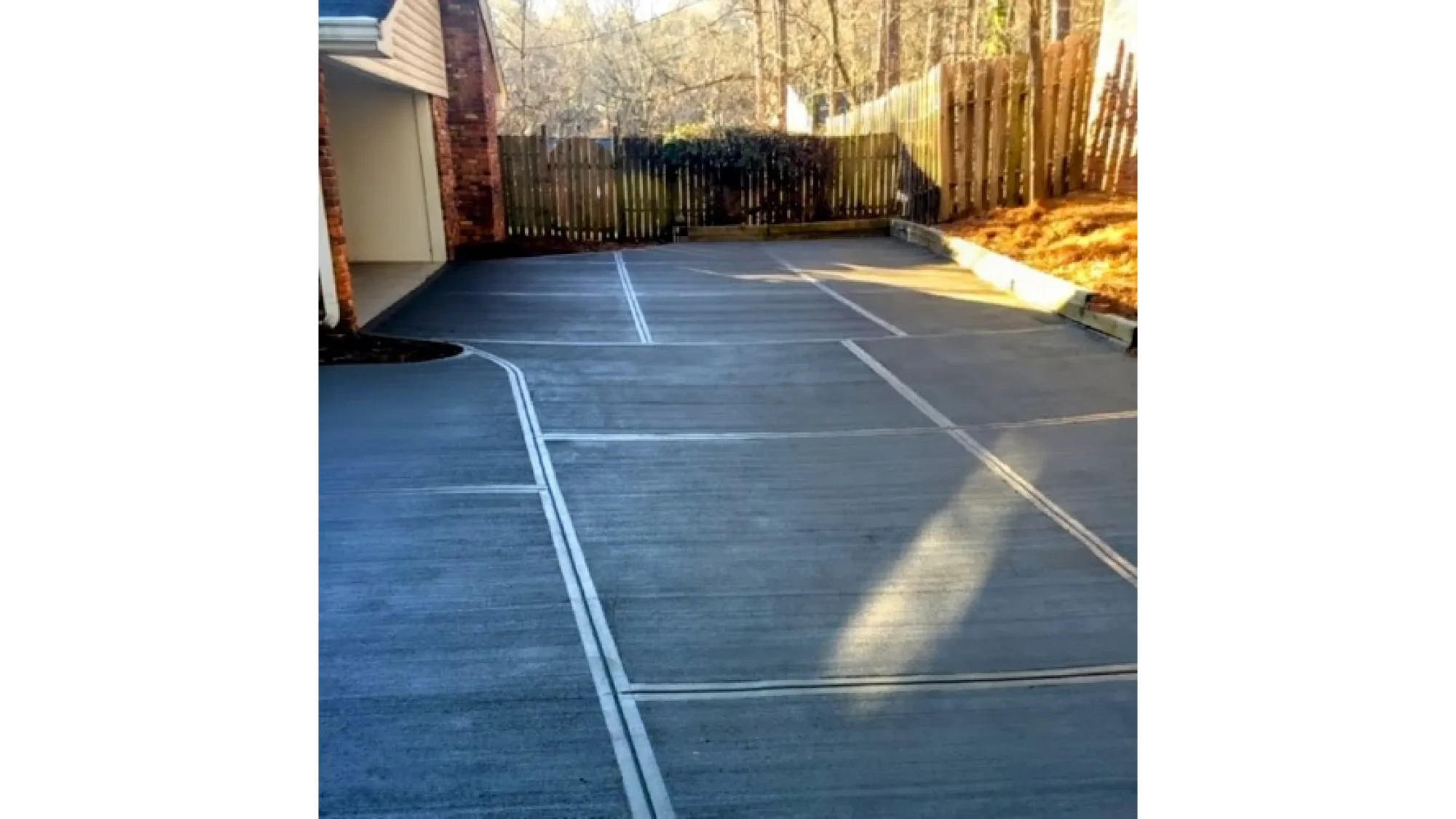
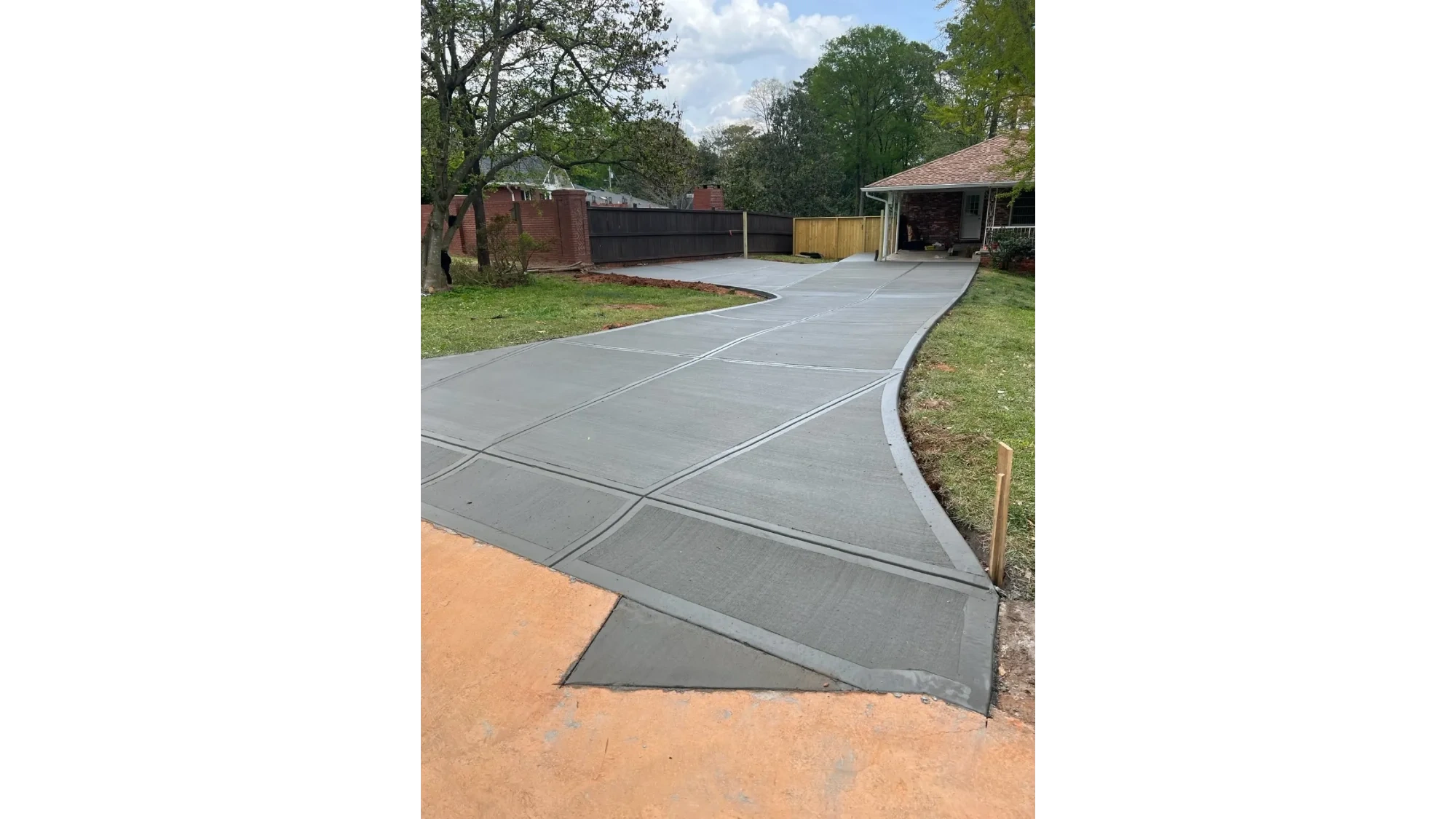
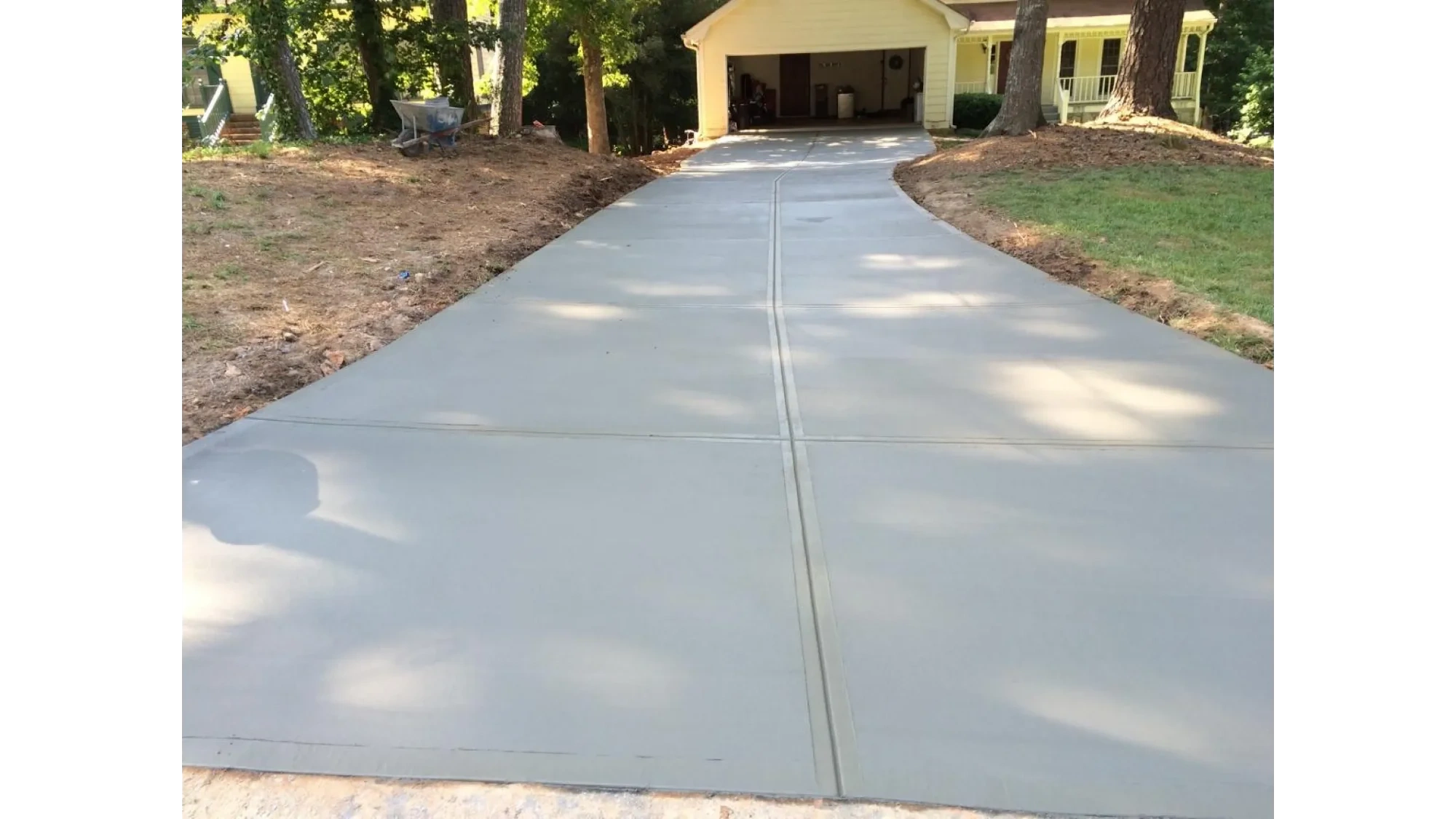
Large Concrete Driveways in Michigan

Wide, Multi-Car & 3,000+ Sq Ft Residential Drives

Slab Happy Concrete pours large residential concrete driveways across Oakland, Macomb, Lapeer, and Genesee counties — three-car and four-car wide approaches, multi-vehicle household parking, oversized executive drives, and home-business contractor pads. Crew sizing, truck coordination, and engineered joint grids built for wide-slab work at the same per-square-foot rate as smaller drives.

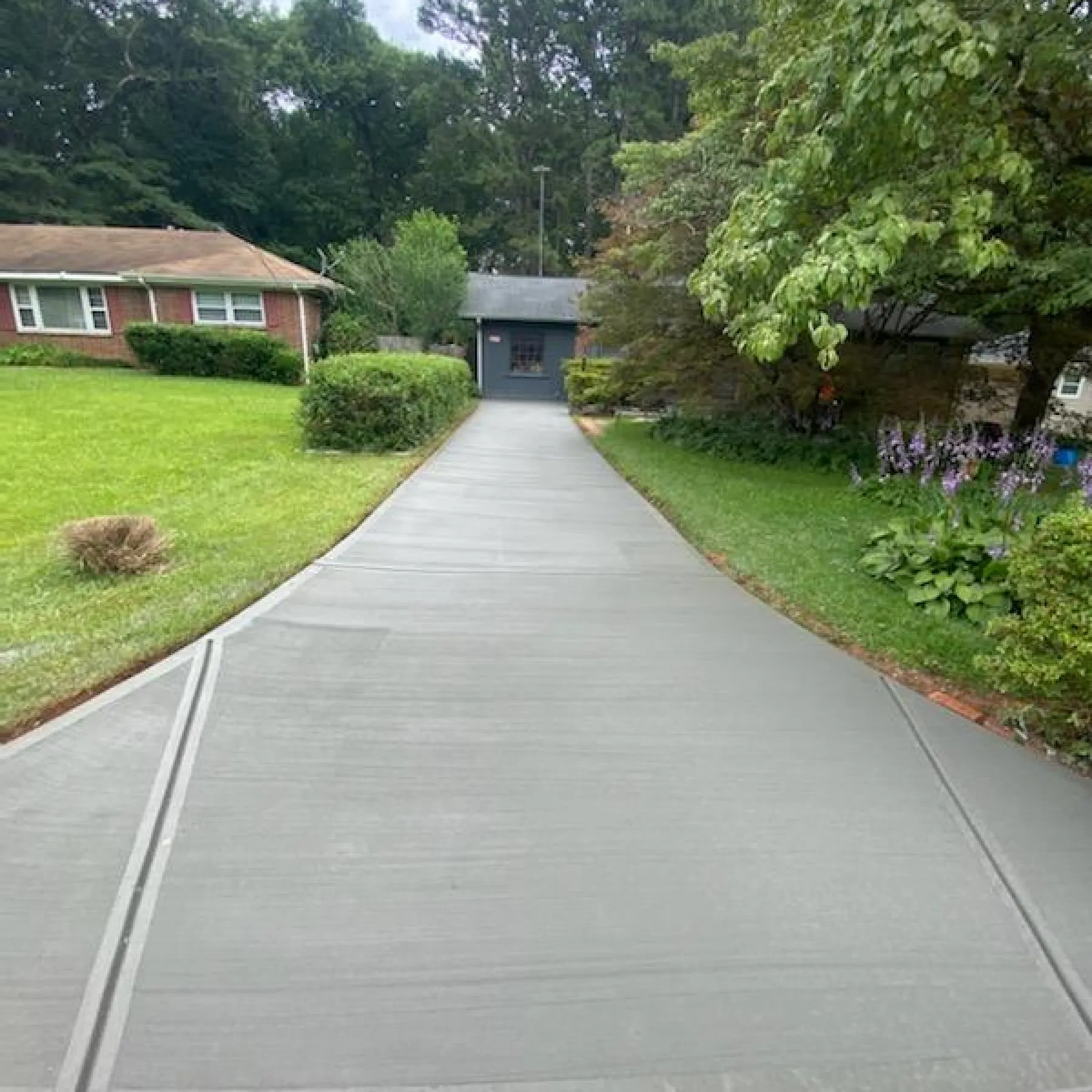
Slab Happy Concrete large driveway contractor Michigan
5.0
Google Rating
3,000+ Sq Ft
Wide-Slab Specialist
Licensed
& Insured
7 Counties
Served

Large Concrete Driveways Are Not Just Bigger — They're Built Different

A standard two-car residential driveway runs 600 to 900 square feet. A large drive — three-car wide, four-car deep, multi-vehicle household, or executive estate approach — is 1,500 to 5,000+ square feet. Two or three times the slab area. Four to six times the concrete volume. And an order of magnitude more complexity in the pour plan.

Most concrete contractors in Southeast Michigan quote a premium per-square-foot rate for large drives because their crews aren't set up for the volume. Small crews hit capacity at about 1,500 square feet per pour day. When they take on a 3,000 sq ft drive, they either split it across multiple days (which creates cold joints visible across the slab) or they tell the homeowner to expect a higher rate per square foot to cover the extra complexity.

That's our sweet spot. Slab Happy Concrete is sized for wide-slab volume pours. Our crew, equipment, and ready-mix supplier relationships are built for 35-to-60-cubic-yard pour days. We can deliver a 4,000 sq ft driveway at the same $12-$15 per square foot rate as a 600 sq ft drive because for us, it's what we do every week — not a stretch project. Wide is what we're best at.

What We Pour

Large Driveway Services

Six configurations of wide, multi-vehicle, and oversized residential drives we handle regularly.

Three-Car Wide Approaches

36-foot-wide drive approach for three-car garages. Typically 1,500 to 2,200 sq ft total including the approach apron and parking pad. Standard residential 4-inch slab, fiber reinforced.

Four-Car Wide Drives

48-foot-wide approaches for four-car garages common in newer executive builds and luxury homes. 2,500 to 3,500 sq ft. Requires wider pour crew staging and multi-truck continuous delivery.

Multi-Vehicle Parking Areas

Wide open residential parking surfaces for households with boats, trailers, RVs, or multiple vehicles. 2,000 to 4,500 sq ft. Typically 6-inch thick with rebar grid for sustained load.

Executive Estate Drives

Oversized approach drives for estate homes — 3,000 to 5,000+ sq ft including wide aprons, guest parking bays, and turnarounds. Plain broom finish default. Engineered joint grid and drainage.

Home-Business & Contractor Pads

Wide reinforced concrete drives for home-based contractors, landscapers, and tradespeople who park trucks, trailers, and equipment daily. 6-inch slab, rebar grid, heavy-duty construction.

Wide Drive Replacement

Tearout and replacement of failed or undersized drives, often combined with widening in the same job. Full new slab with upgraded dimensions and reinforcement.

Volume Pour Work

What Makes Wide-Slab Work Different

Five things that scale when the slab gets wide — and why smaller crews struggle with them.

1. Multi-Truck Pour Coordination

A 3,000 sq ft driveway at 4 inches thick takes roughly 37 cubic yards of concrete. A 4,000 sq ft drive runs 50 yards. A 5,000 sq ft estate drive pushes 60+ yards. Each ready-mix truck holds about 8-10 yards, so we're looking at 4 to 8 truck loads arriving in a timed sequence. If loads arrive too close together, concrete sits in the chute. If they arrive too far apart, the previous section starts setting before the next pours against it — producing visible cold joints across the slab. We coordinate delivery cadence directly with our ready-mix supplier so trucks arrive on pour-ready intervals, typically 20-30 minutes apart depending on placement speed.

2. Transverse + Longitudinal Joint Grids

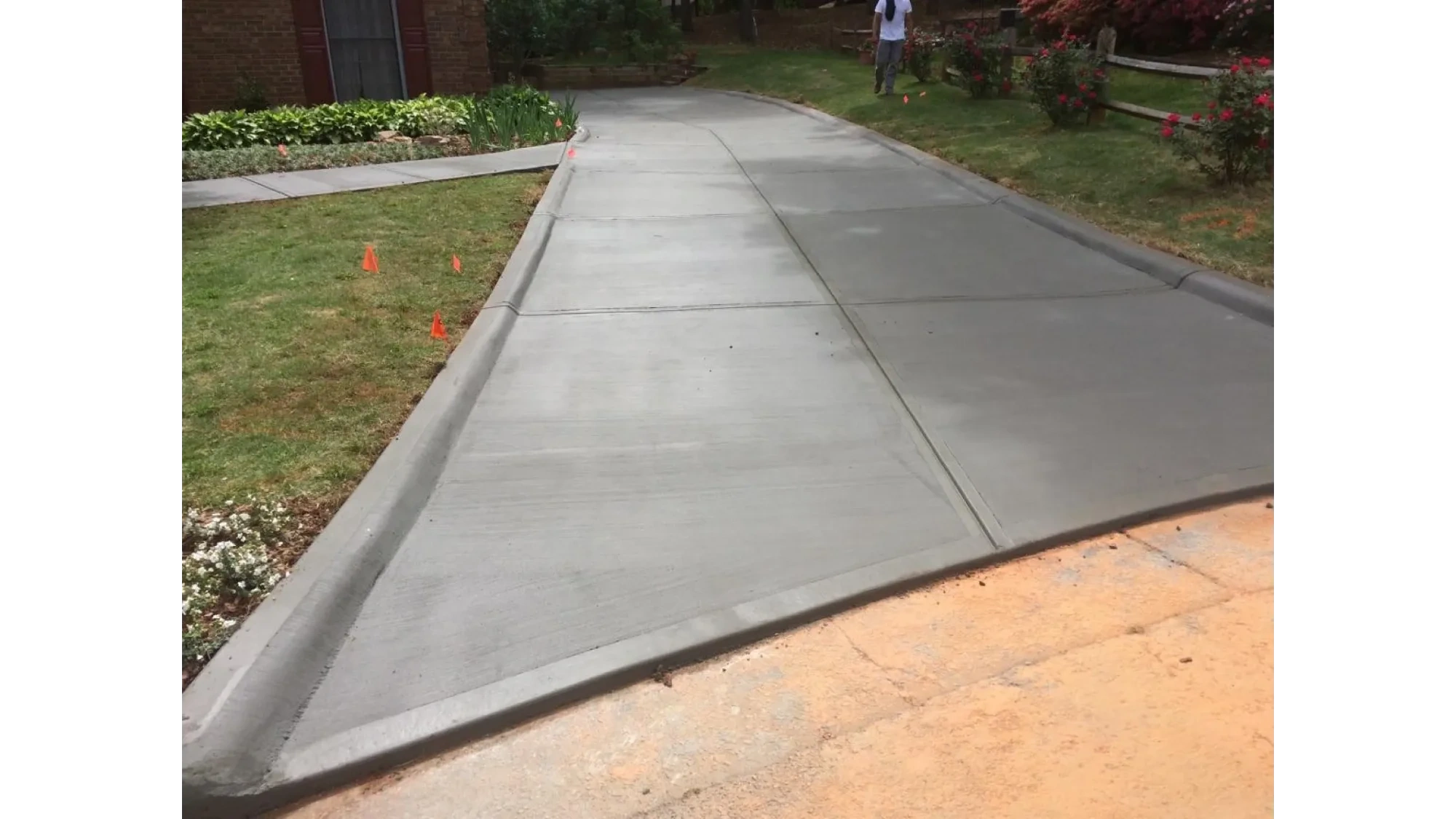
A narrow drive (12-14 feet wide) can get by with transverse joints only — cross-cuts every 10-15 feet. A wide drive (24+ feet) would crack along the centerline without longitudinal joints. We lay out control joints in a grid — transverse AND longitudinal — with spacing matched to slab thickness (10-12 feet in each direction on a 4-inch slab, 12-15 feet on a 6-inch slab). The grid creates panels that can flex independently through Michigan's freeze-thaw cycles without cracking across the middle. Joints are saw-cut within 24 hours of pour so they activate before random cracking starts.

3. Base Prep at Scale

A 3,000 sq ft excavation moves roughly 75 cubic yards of soil and brings in 45+ cubic yards of base aggregate. On a small drive you compact the base with one or two plate-compactor passes; on a wide drive the base needs to be laid down in 2-3 lifts and compacted at each lift to get uniform density across the full slab area. Skipping this creates differential settlement — one area of the slab drops more than another, and you get a diagonal crack across the slab a year later. We excavate to proper depth, install 6-8 inches of 21AA aggregate in lifts, and compact each lift with a reversible-plate or jumping-jack compactor before placing the next.

4. Reinforcement for Wide Loads

Fiber mesh is fine for passenger-vehicle drives up to moderate widths. For wide drives that will see multiple vehicles, trailers, or heavier loads, we recommend rebar grid — typically #4 (1/2-inch) rebar on 18-inch centers tied at every crossing. The rebar grid distributes load across the slab width, preventing the kind of point-load cracking you see on undersized wide drives where a heavy truck sits over one spot for years. On home-business and contractor drives we go to 6-inch slab thickness with #5 (5/8-inch) rebar — serious heavy-duty construction that holds up under sustained commercial-residential use.

5. Drainage Across Broader Surfaces

Water management on a wide drive is not trivial. A 30-foot wide slab catches 50% more rain than a 20-foot wide one, and the water has to go somewhere. Default design is a crown (peak along the centerline) with 1/8-to-1/4 inch per foot slope to both edges, so water sheds off the sides. On drives that can't shed to both sides (typically when the drive sits against a building or retaining wall), we single-slope to one edge with slightly more pitch, and may integrate a trench drain or French drain along the low edge to carry runoff away. This all gets planned during the estimate — we don't "figure it out" during the pour.

Reference

How Large Is Large?

Typical square footage ranges by configuration.

Standard Two-Car

Baseline: 600-900 sq ft

Typical residential driveway — 12 ft wide × 50-70 ft long. Not a large drive, included for reference.

Wide Two-Car

1,000-1,400 sq ft

20-24 ft wide × 50-60 ft long. Handles comfortable two-car side-by-side parking or two-way passing.

Three-Car Approach

1,500-2,200 sq ft

36 ft wide × 50 ft deep with 14-ft approach from the road. Standard for three-car garages.

Four-Car Approach

2,500-3,500 sq ft

48 ft wide × 55-65 ft deep. Luxury and executive home standard.

Multi-Vehicle Compound

3,000-4,500 sq ft

Wide drive with integrated parking pads for trailers, boats, RVs, or multiple vehicles.

Executive Estate Drive

3,500-5,500+ sq ft

Full estate approach with wide aprons, guest parking, turnaround, and multi-bay garage access.

Contractor / Home-Business

2,000-5,000 sq ft

Heavy-duty 6-inch reinforced slab for parking work trucks, trailers, and equipment on residential property.

Oversized Rural

3,000-6,000+ sq ft

Combined approach drive + barn/outbuilding parking area common on rural parcels in Metamora, Oakland Township, and Leonard area.

Where We Pour Large Concrete Driveways

Large drives follow affluent neighborhoods, rural estate parcels, and multi-vehicle households. Highest volume markets:

Bloomfield Hills

Executive estate drives, four-car approaches, multi-vehicle compounds. Standard 3,000-5,000 sq ft.

Troy

Three-car executive home drives, wide parking pads. Neighborhoods near Somerset and along Big Beaver.

Rochester Hills

Large suburban executive homes with three and four-car drives, 2,000-3,500 sq ft ranges.

West Bloomfield

Lake-area estates with multi-vehicle drives, boat/RV parking integrated into approach.

Oakland Township

Rural estate properties with oversized drives serving main house plus outbuildings.

Novi

Large new-construction homes with wide drives, three and four-car approaches.

Farmington Hills

Executive subdivisions with three-car approaches, multi-vehicle household drives.

Metamora

Horse country estates, combined approach + barn parking compounds.

Clarkston

Rural and lake-area executive properties with wide approaches and guest parking.

Got Questions?

Large Driveway FAQ

How much does a large concrete driveway cost in Michigan?+
Large concrete driveway installation in Michigan typically ranges from $12 to $15 per square foot installed — the same per-square-foot rate as smaller drives. What scales is total square footage. A wide three-car approach (36 ft wide × 50 ft deep) covers roughly 1,800 sq ft. A full four-car drive with guest parking might reach 3,000 to 4,500 sq ft. Oversized commercial-residential drives for home businesses or contractor homes can run 5,000+ sq ft. Final cost depends on width, depth, base conditions, reinforcement, drainage requirements, and site access for trucks. Free on-site estimate included.
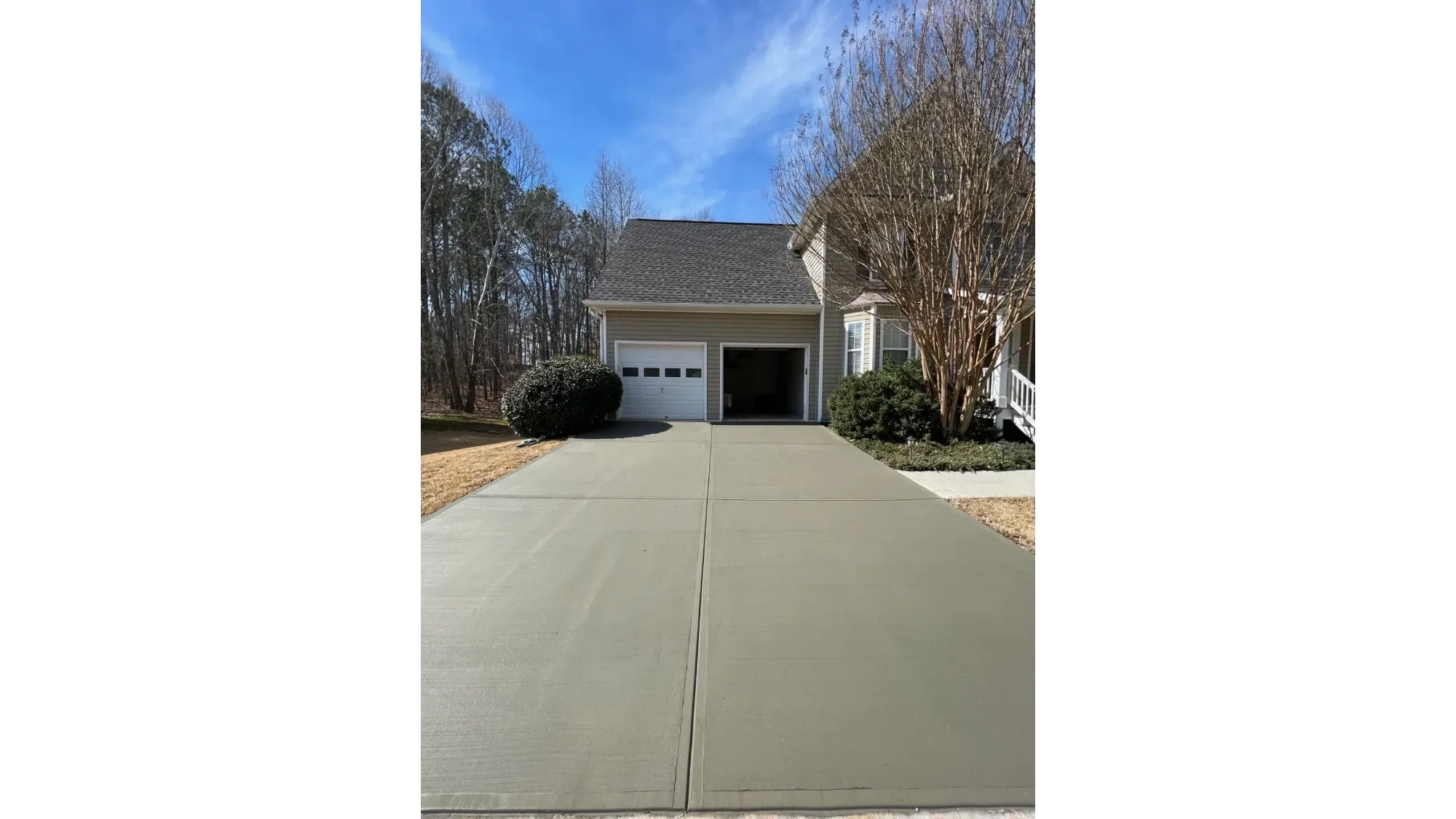
What counts as a large concrete driveway?+
In residential terms, we consider anything over roughly 1,500 sq ft a large drive. A standard two-car drive is typically 600 to 900 sq ft. A three-car wide approach in front of a garage runs 1,200 to 1,800 sq ft. Four-car parking areas and multi-vehicle households approach 2,500 to 4,000 sq ft. Executive estate drives with approach aprons, parking bays, and wide turnarounds can exceed 5,000 sq ft. All of these get poured the same way — the only thing that scales is crew size and truck coordination.
How do you pour wide concrete slabs without cold joints showing?+
Continuous pour with coordinated ready-mix delivery. A 3,000 sq ft drive pour takes roughly 35 to 45 cubic yards of concrete — 4 to 5 truck loads. If those loads arrive too far apart, the previous section starts to set before the next gets placed against it, creating a cold joint visible as a line across the slab. We coordinate with our ready-mix supplier to stage deliveries at the right cadence, keep the pour moving continuously across the full width, and finish each section before the previous starts to firm up. On the largest pours we run two crews — one placing, one finishing — so neither step becomes the bottleneck.
What joint layout do you use on wide driveways?+
Wide drives need both transverse and longitudinal control joints — a grid layout, not just cross-cuts. Joint spacing matches slab thickness: on a 4-inch slab, joints every 10 to 12 feet in both directions create panels that can flex independently through thermal cycles. Wider drives would crack in the middle of panels if the grid is too coarse. Cut joints with a concrete saw within the first 24 hours of pour, before the slab goes through its first temperature cycle — otherwise cracks form randomly before the joints become the weak points.
What reinforcement do you recommend for large driveways?+
Fiber mesh is standard for residential passenger-vehicle drives. For large drives that will see heavier loads — contractor vans, trailers, multiple daily vehicles, or commercial-residential use — we recommend rebar grid on 18-inch centers through the wheel-path areas and at section transitions. The purpose isn't to prevent cracking entirely (all concrete cracks eventually through thermal cycling). It's to keep cracks tight and structural rather than progressive. On oversized drives we often thicken the slab to 6 inches instead of the standard 4, which adds load capacity and crack resistance more economically than reinforcement alone.
How long does a large driveway installation take?+
For a 2,000 to 3,000 sq ft drive, expect 4 to 6 working days including tearout of existing surface, excavation, base preparation, forming, pour day, and initial cure. 4,000+ sq ft jobs run 5 to 8 days depending on site access and complexity. Pour day itself is one day even on the largest residential drives — the rest is setup and cure. You can walk on the drive after 7 days, drive passenger vehicles after 14 days, and bring heavy loads after 28 days.
Why does Slab Happy do large driveways when other contractors focus on smaller jobs?+
Crew size, equipment, and pour planning. Small drives are commodity work — any two-person crew with a mixer can pour a 600 sq ft driveway in a day. Large drives require coordinated multi-truck delivery, crews sized for continuous placement and finishing, and experience with wide-slab joint grids and drainage planning across broader surfaces. That's what we're set up for. Our crew, equipment, and supplier relationships are sized for volume pours. It's the sweet spot for our operation and we can deliver large drives at the same per-square-foot rate as smaller ones while most smaller contractors quote premiums for the scale.
Get In Touch

Request a Free On-Site Estimate

We'll come out, measure the site, plan the pour, and give you a detailed quote at the same per-square-foot rate as smaller drives.
Contact Information

Our Office

100 Rochester Rd Suite 100-D
Leonard, MI 48367

Get Directions

Call Us

(248) 929-5102

Service Areas

Oakland, Genesee, Macomb, Lapeer, Livingston, St. Clair & Wayne Counties

Business Hours

Monday – Friday: 9 AM – 5 PM
Saturday – Sunday: Closed